


Bring vibrant color, dynamic movement, and playful energy to your community tank with the Clown Loach(Chromobotia macracanthus). Known for their bright orange bodies accented with three bold, vertical black stripes and reddish fins, Clown Loaches are among the most beloved bottom-dwelling freshwater aquarium fish in the hobby.Beyond their striking appearance, these active fish are famed for their quirky personalities, playful schooling behavior,and their reputation as nature's best pest snail exterminators.
Key Specifications & Care Guide
Natural Origin & Habitat
Native to the warm, slow-to-moderately flowing rivers and floodplains of Sumatra and Borneo in Indonesia, Clown Loaches thrive in clean, oxygen-rich environments. In the wild, they migrate seasonally into flooded forest floors where water is soft, slightly acidic, and shaded by dense jungle canopies.
Tank Environment & Setup
To keep your Clown Loaches healthy and stress-free:
-
Substrate: Use smooth river sand or fine, rounded gravel. Coarse or sharp gravel can damage their delicate sensory barbels.
-
Aquascaping: Provide plenty of hiding spots using smooth driftwood, bogwood, slate caves, and PVC piping.They appreciate shaded resting zones.
-
Water Quality & Flow: Strong biological filtration and moderate water movement with high oxygenation are essential. Clown Loaches are scaleless (possessing only microscopic scales embedded in their skin), making them sensitive to poor water conditions, sudden parameter swings, and certain copper- or formalin-based medications.
Minimum Tank Size
While commonly sold as 2-inch juveniles, Clown Loaches grow large (often reaching 8 to 12 inches) and live for up to 15 to 20 years. A 75-gallon aquarium is suitable for young specimens, but an adult group requires an aquarium of 100 to 150+ gallons (at least 5 to 6 feet in length) to provide sufficient swimming room.
Diet & Feeding
Clown Loaches are eager omnivores that actively forage along the substrate.
-
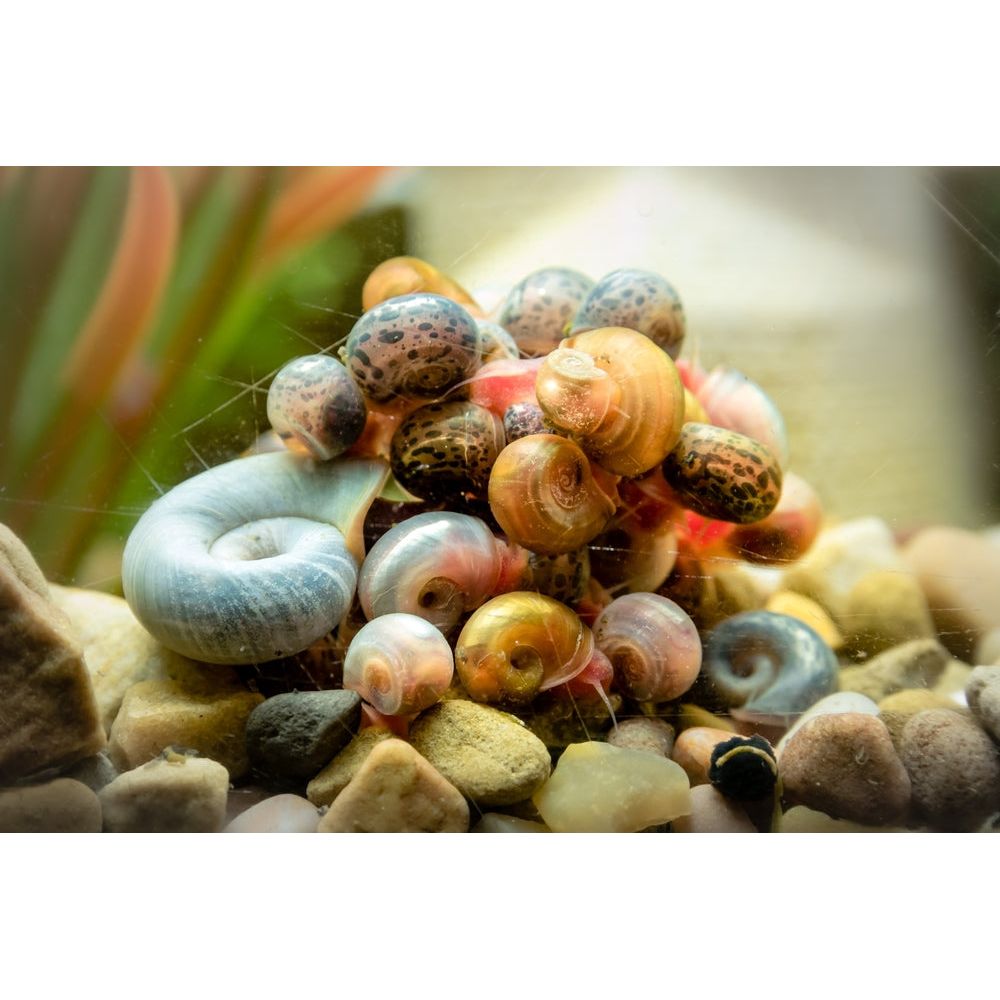
Pest Snail Control: Highly sought after for their natural ability to rid planted tanks of nuisance snails (such as bladder snails, ramshorn snails, and Malaysian trumpet snails).
-
Daily Fare: High-quality sinking loach pellets, algae wafers, and sinking carnivore tabs.
-
Live & Frozen Treats: Bloodworms, brine shrimp, daphnia, tubifex, and chopped earthworms.
-
Greens: Blanched zucchini, cucumber slices, and shelled peas help balance their digestion.
Compatible Tank Mates
Clown Loaches are strictly schooling fish and must be kept in groups of at least 4 to 6 individuals. Single loaches often become reclusive, timid, or stressed. They are peaceful community fish and pair well with:
-
Peaceful medium-to-large tetras (e.g., Congo Tetras, Bleeding Heart Tetras)
-
Rainbowfish and Gouramis
-
Barbs (such as Tiger Barbs or Rosy Barbs)
-
Peaceful cichlids (e.g., Angelfish, Severums, Discus)
-
Avoid: Aggressive, territorial bottom dwellers or ornamental dwarf shrimp (which will be viewed as food).
Breeding Information
Breeding Clown Loaches in a home aquarium is exceptionally rare. In nature, they are migratory spawners triggered by seasonal monsoon flood conditions. Commercial aquaculture facilities typically rely on specialized hormone stimulation in massive holding facilities to achieve successful spawns.
You may also like
More from KGTropicals
Recently viewed